Major Afghan Refugee Flows, Late 2000
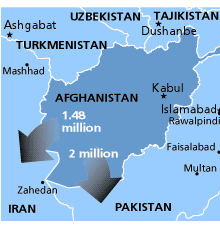
Source: U.S. Committee for Refugees, World Refugee Survey 2001 (Washington, DC).
by Yvette Collymore
(October 2001) What conditions do Afghanistan's refugees face? For more than two decades, the Afghan population has been shouldering the burden of civil conflict, the brutal effects of which have been exacerbated by acute and prolonged drought, widespread starvation, and especially harsh winters. The result has been massive movements of people within the country and across its borders and a mounting catastrophe in which millions of people rely on humanitarian assistance for survival.
|
Major Afghan Refugee Flows, Late 2000
Source: U.S. Committee for Refugees, World Refugee Survey 2001 (Washington, DC). |
In mid-2001, an estimated 3.6 million Afghans were already living outside their national borders — mainly in Pakistan and Iran — while 900,000 remained as refugees within their own country, according to the U.S. Committee for Refugees. As a result of the military response to the September 11 terrorist attacks in the United States, tens of thousands more people have fled their homes, millions of them massed along their country's borders.
The conditions that have caused many to flee their homes include some 23 years of violence and conflict in the mountainous, landlocked Asian country. The ongoing conflict has been especially harsh for women and children, whose day-to-day conditions worsened following the 1996 takeover by the Taliban of most of the country. Policies that have targeted women and girls have violated their fundamental rights and freedoms. For one thing, girls' schools were closed in Taliban-controlled areas and women teachers were barred from working, a policy that also affected the education of boys, given the fact that many schools depended on women teachers, according to the United Nations Children's Fund (UNICEF).
During times of conflict, the options and resources available to women are different from those of men, many of whom may be combatants. Faced with overcrowded living conditions, inadequate food, and unsafe drinking water, women have the additional burden of caring for other family members. Separated from family and communities that traditionally offered protection and security, women often are victims of violence.
Some Measures of Life in Afghanistan
Yvette Collymore is senior editor at the Population Reference Bureau.
For More Information
UNICEF's State of the World's Children 2002: www.unicef.org
UNDP focus on Afghanistan: www.undp.org/dpa
U.S. Committee for Refugees' report on Afghan refugees: www.refugees.org/