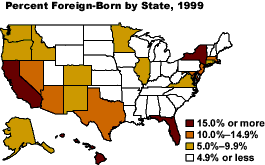
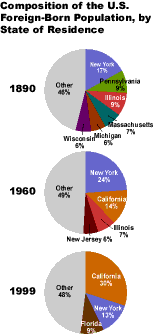
In 1890, about half of the foreign-born population resided in six states: New York, Pennsylvania, Illinois, Massachusetts, Michigan, and Wisconsin. By 1960, half of the foreign-born population was concentrated in four states — New York, California, Illinois, and New Jersey. By 1999, over half of the foreign-born population in the United States was concentrated in three states — California, New York, and Florida. Three-quarters of the foreign-born population resided in eight states — California, New York, Florida, Texas, New Jersey, Illinois, Massachusetts, and Arizona.
Settlement patterns are based on several factors but are linked most closely to job availability, family or community ties, and proximity to the country of origin. Most immigrants tend to settle, at least initially, near ports of entry or in established immigrant communities. For example, most Mexican immigrants live in the states that border Mexico — California and Texas — and most immigrants from Cuba settle in Florida. Nearly half of the foreign-born population in Hawaii is Filipino, and more than half of the foreign-born population that immigrated from China and Japan has remained in western states.
In 1999 there were about 8 million foreign-born people living in California, accounting for 24 percent of the population. Other states with a relatively large foreign-born population were New York (19 percent), Florida (16 percent), Hawaii (15 percent), and Nevada (nearly 15 percent). The state with the smallest percentage of foreign-born people was North Dakota (less than 1 percent).