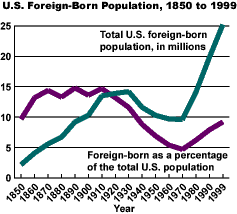
Immigration has played a vital role in shaping American society. In 1850, there were 2.2 million foreign-born people living in the United States, accounting for 9.7 percent of the population. Levels of immigration increased during the period of rapid industrialization at the turn of the century, and by 1900, there were 10.3 million foreign-born people in the United States (13.6 percent of the population). The foreign-born population continued to increase until 1921, when Congress imposed restrictive immigration legislation. Over the next 50 years, the number of deaths among the foreign-born population outnumbered the number of new immigrants, and there was a gradual decline in the number of foreigners in the United States. In 1970, the foreign-born population was at its lowest level of the century, at 9.6 million (5 percent of the population).
A dramatic increase in the U.S. foreign-born population took place between 1970 and 1998 as a result of legislation passed in 1965 that relaxed immigration barriers. The foreign-born population increased from 9.6 million to 24.4 million. About a third of the current foreign-born population has arrived in the United States since 1990. Despite the recent rise, however, the percentage of the population that was born outside of the United States was lower in 1998 (9 percent) than at the turn of the century (14 percent).