In 1997 there were about 3.9 million births in
the United States and a total fertility
rate (TFR) of 2.0 births per woman. Minorities
contributed 40 percent of all births, although they made up only 28
percent of the population. One reason minorities account for a
disproportionate share of births is that a larger proportion of
minority women are in their childbearing
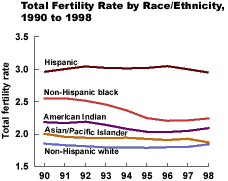
ages, but minority women also have more children than non-Hispanic
white women, on average. In 1997, whites had an average of 1.8 births
per woman, compared with 1.9 births among Asian Americans, 2.0 births
among Native Americans, 2.2 births among blacks, and 3.0 births among
Hispanics. With an average of three births per woman, the 1997 total
fertility rate among Hispanics rivals that of the U.S. population in
the early 1960s during the tail end of the baby boom.
Blacks are the only group who experienced a
substantial decline in fertility rates over the past decade, with a
decline in the TFR from 2.5 in 1990 to 2.2 in 1997. Since 1993, the
number of Hispanic births has outnumbered the births to black women, a
trend that is likely to continue as the Hispanic population grows.