|
 |
|
 |
|
|
|
|
Occupational
Segregation
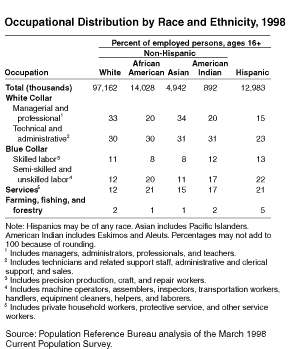
Hispanics, African Americans, and American
Indians are more likely than non-Hispanic whites or Asians to work in
lower-paying, semi-skilled jobs or as service workers. They are less
likely to hold white-collar jobs, which range from managerial and
professional to clerical positions. Blacks, Hispanics, and American
Indians who do hold white-collar jobs are more likely than whites or
Asians to work as typists, clerks, or salespeople rather than as
higher-earning managers or professionals. And, while the share of U.S.
workers in farming, fishing, or forestry is quite small, it is
greatest among Hispanics, reflecting the large number of Hispanics who
work in agriculture.
|
|
|
|
|
| |
|
|
|
|
Source:
U.S. Bureau of Labor Statistics
Center for the Study of Sports in Society (Data
on Minorities in Professional Sports)
|
|
| One of the few higher-earning occupations in
which blacks and Hispanics are well represented is professional
sports. In 1997-1998, over three-fourths of players in the National
Basketball Association (NBA) and two-thirds of players in the National
Football League (NFL) were black. Of the major professional sports,
Major League Baseball (MLB) and Major League Soccer (MLS) include the
most diverse groups of players. Over 20 percent of the players in MLB
and MLS are Hispanic, and at least 15 percent are black. The National
Hockey League is the only major professional sports league that
remains almost exclusively white. |
|
| |
|
|
|
| |
|
|
|
|
|
|
|
|
|
|